Déjà Vu of Survival: Living Between HIV and Diabetes
- Pholo Ramothwala
- Dec 12, 2025
- 3 min read


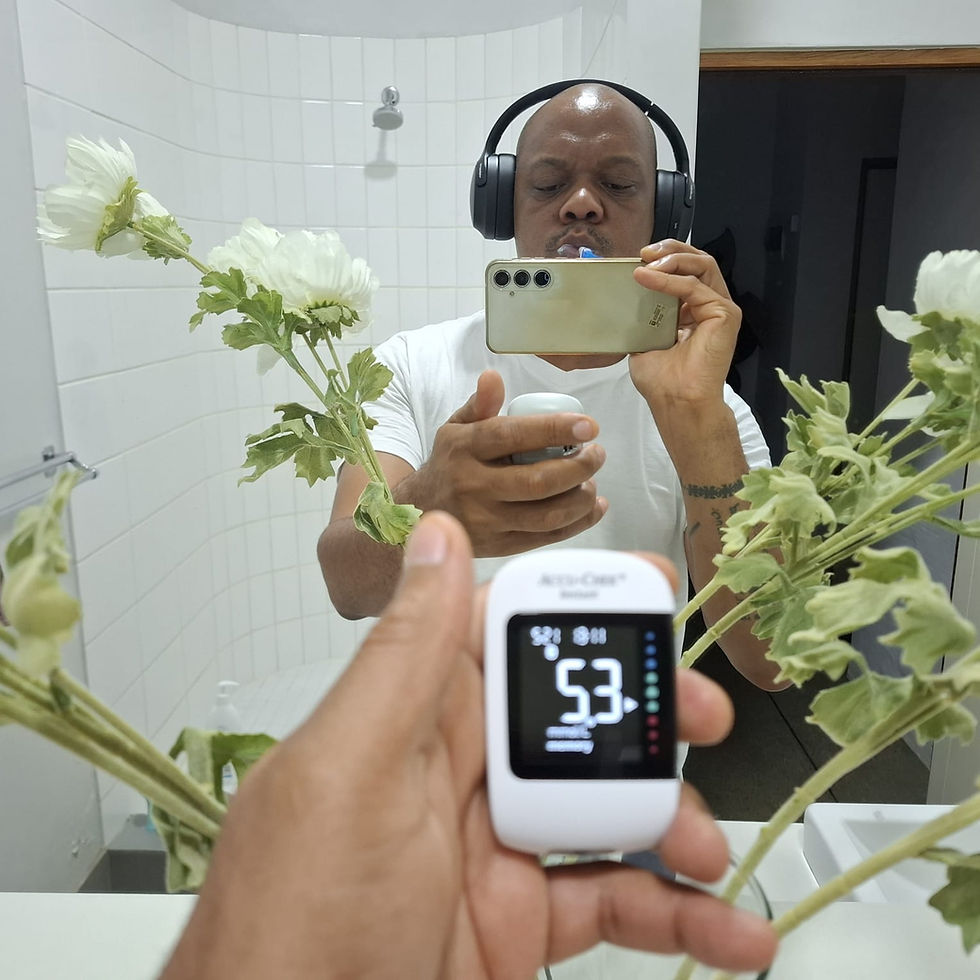
My body has carried me through three epidemics in 25 years. First it was HIV, then COVID-19, and now diabetes and hypertension, the Non-Communicable Diseases (NCDs) that have suddenly taken centre stage in my life. With these new conditions settling in, I can’t help but feel a deep sense of déjà vu.
There is something familiar, yet profoundly different, about this chapter. Living with HIV for more than two decades taught me how to navigate fear, stigma, discipline, and survival. Now, facing diabetes and hypertension, it feels like watching an old movie with a new cast. The storyline has changed, but the emotional terrain, the uncertainty, the resilience, the need to constantly adapt feels almost the same.
When I was first diagnosed, HIV was the mountain I had to climb. Many of us feared opportunistic infections like TB, pneumonia, and fungal diseases. We were warned about them constantly, and that knowledge helped us act quickly. Looking back, I realise that chronic conditions like diabetes, hypertension, high cholesterol, and even some cancers were never raised as future concerns. Health workers didn’t mention them, research didn’t emphasise them, and the conversations simply didn’t happen - perhaps because it was still early in the HIV response, and survival was the only priority.
Ironically, those same NCDs, also referred to as “HIV comorbidities”, have become the price many of us pay for living longer.
Diabetes and hypertension are nothing like the HIV I first met. They are silent, often invisible. Many people don’t know they have them until damage has already happened. I believe this is due to lack of awareness. Even those who know may struggle with management. The challenge is not only physical, but emotional and psychological - a constant reminder that vigilance is required even when everything feels normal.
The Déjà Vu Moments
Despite their differences, HIV and diabetes/hypertension mirror each other in striking ways. Here is just a few areas I have observed.
Lifelong treatment is one of the clearest similarities. While HIV taught me the discipline of taking medication every day, diabetes takes that discipline further by demanding deliberate choices around food, stress, sleep, and lifestyle.
Yoh! Both, journeys require constant self-management. You must become your own health manager, monitoring, adjusting, negotiating, sometimes even arguing with yourself.
The risk of resistance is another parallel. Missing HIV treatment can lead to drug resistance, while long-term diabetes medications may lose effectiveness without consistent supportive habits. Different conditions, same lesson: consistency matters.
Stigma also connects these experiences. HIV stigma was loud and cruel, while diabetes stigma whispers, “You did this to yourself.” It is quieter, but still painful. Society adds its own distortions: with HIV, people judged morality; with diabetes, they mock sexual dysfunction. Both wounds cut deep.
The Reality and the Opportunity
The truth is that many of us who have lived long with HIV are now facing diabetes and hypertension. Not as separate health challenges, but as new chapters in the same survival story.
And yet, there is opportunity here. Our lived experience with HIV comes with lessons: we already know how to fight, how to learn, how to adapt, how to rebuild. HIV taught us resilience. Diabetes is teaching us responsibility. Together, they are shaping a new kind of health leadership, one grounded in lived experience.
My Point Is This
If you’re living with a chronic condition - HIV, diabetes, hypertension, or all of them, this is your moment to rise into a new kind of awareness:
Advocate for yourself. Ask questions. Demand clear explanations.
Pay attention to your body. Silent conditions require louder vigilance.
Push for better systems. Challenge toxic food environments, healthcare gaps, and policies that profit from our suffering.
Share your story. Your lived experience is data, powerful enough to shape better programmes, better services, and better prevention.
We didn’t survive HIV only to be defeated by silence. This déjà vu is not a warning, it is an invitation: to lead, to learn, and to live beyond every diagnosis.


Comments