When Food Becomes the Enemy!
- Pholo Ramothwala
- Dec 15, 2025
- 3 min read


There was a time when food felt safer and healthier.
Today, before I eat, I read the packaging, question the ingredients, doubt the claims, and wonder where it really came from. That is a very different relationship from the one I grew up with, where I didn’t have to wonder whether food would nourish me or harm me. What I ate came from places I could see and understand, and because of that, it felt trustworthy.
I grew up in a rural setting, and food came from the ground and the yard. Vegetables, berries, and fruit from the garden. Chickens in the backyard, eggs collected by hand. Meals were simple, seasonal, and often predictable. Sugar was rare. Portions made sense. Nothing was complicated. As a family, we ate what was cooked, what was available, and what everyone else was eating.
That relationship with food shaped me long before I knew words like nutrition, metabolism, or chronic illness. It probably explains why I later chose to train as a chef and why my cooking style remains rooted in simplicity and balance.
Then I went to boarding school, and everything changed.
Convenience arrived disguised as freedom. Refined starches, sugary drinks, processed meals. Eating late, eating fast, eating without thought. Vegetables disappeared quietly, and so did balance, variety, and moderation. At the time, it felt like progress. I didn’t realise that food was becoming less safe, less healthy, while my body was learning habits it would later struggle to unlearn.
Years passed before the bill arrived: weight gain, diabetes, hypertension. By then, I learned something important, that the body keeps record.
That was the moment my body started keeping score. What I ate no longer disappeared quietly. Blood sugar spiked. Blood pressure reacted. “Suddenly”, meals had consequences. Portion size mattered. Timing mattered. Sugar, salt, and the quality of fat all mattered. Food that once felt simple now demanded assessment, measurement, and intention. Every meal came with a question from my body: What do you know about what you are eating?
At 47, food is no longer background noise. It is information I might need later.
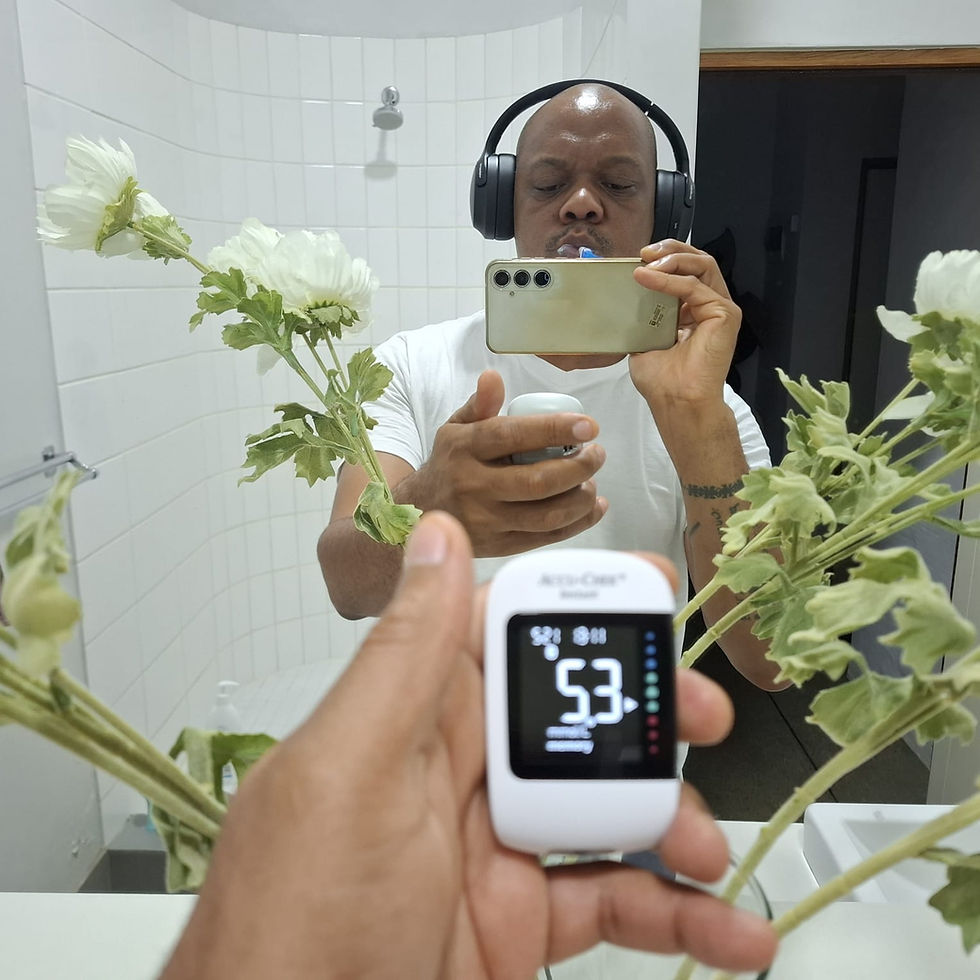
I live with diabetes and hypertension, among other conditions. They demand more than medication. They demand attention, attention to what I eat, how much, how often, and how consistently. I have learned a hard truth, that medicine can support me, but it cannot cancel out how I eat. The body remembers.
That’s when eating healthy had to become more than just “eating vegetables.” Vegetables returned, but they were only part of the shift. I had to add and adjust my eating habits by including more whole grains, better protein choices, less sugar, less salt, more water, regular meals, and restraint. I had to unlearn convenience and relearn nourishment. What I once resisted or ignored has become part of my treatment.
The shift wasn’t emotional. It was a necessary change I had to make.
Reality is that, living with chronic illness changes your relationship with food. Taste matters less than impact. Food becomes either support or sabotage. Ultra-processed foods send loud, damaging signals to bodies already under strain, yet they are the most accessible, the most affordable, and the most aggressively marketed.
That contradiction is not accidental. So, the answer is not perfection. It is self-awareness.
Choosing less processed food when possible. Eating balanced meals, not extreme ones. Paying attention to portions, timing, and patterns. Accepting that what worked in your teens may now actively harm you. Listening when the body whispers, before it has to shout.
For those of us living with chronic illness, eating is no longer passive.
1. It is an act of self-respect.
2. An act of leadership.
3. An act of staying alive.
I didn’t like vegetables as a child. I lost balance as a teenager. I reclaimed healthier eating as an adult managing chronic illness.
So, remember this: food doesn’t have to be the enemy. But what we are exposed to can no longer be ignored. Survival is built quietly and daily, one conscious choice at a time.


Comments